
John Louis Esposito (1940-2026)
Further John’s Legacy
Donations to further John’s legacy should be made to Georgetown University’s Bridge Initiative on Islamophobia at ACMCU.
Digital Donation Physical Checks Donate by PhoneWe are deeply saddened to announce that Professor John L. Esposito passed away on July 15, 2026 in Philadelphia as a result of complications from heart surgery.
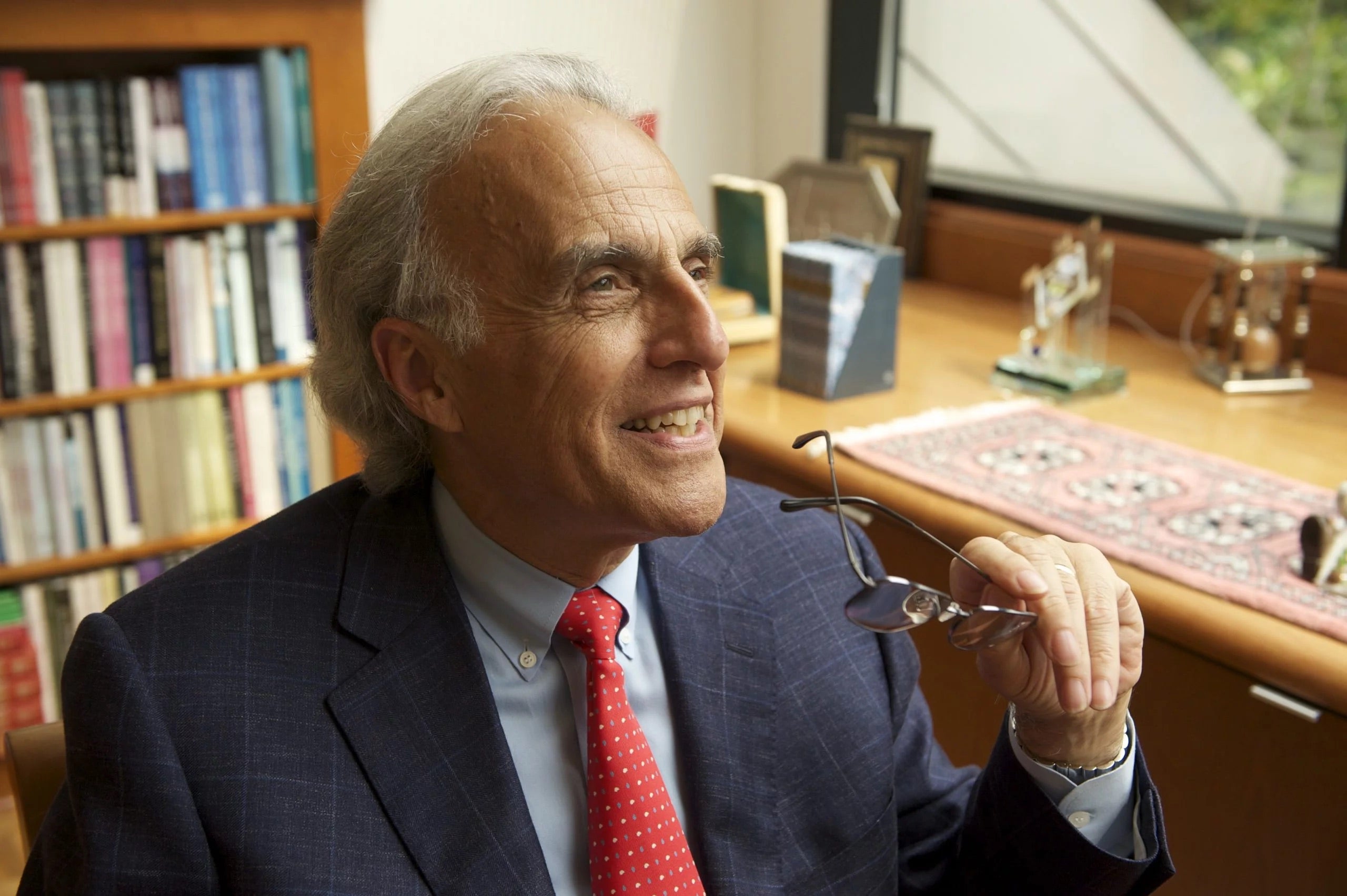
John was the Distinguished University Professor Emeritus of Religion and International Affairs and Professor of Islamic Studies at the Edmund A. Walsh School of Foreign Service at Georgetown University. He also served as the founding director of the Prince Alwaleed Bin Talal Center for Muslim-Christian Understanding and the founding director of The Bridge Initiative on Protecting Pluralism and Ending Islamophobia.
John did not apply for a position at Georgetown, Georgetown recruited him. Seven years later, he was appointed University Professor, the only one to earn this rank at the School of Foreign Service at the time, joining a select group of individuals at Georgetown who enjoyed this prestigious recognition.
Academically, John Esposito was a leading global scholar of the study of religion and international affairs, focusing on Islam and Muslim societies. It is not an exaggeration to state that he single-handedly defined and shaped the modern study of Muslim societies and Islam.
John’s intellectual output was staggering. He published more than 55 books, mainly with Oxford University Press. These books have been translated into dozens of languages. Many of John’s books are required reading today at universities and colleges around the world. Some of his books include: The Future of Islam, Islamophobia and the Challenge of Pluralism in the 21st Century, Who Speaks for Islam? What a Billion Muslims Really Think, Unholy War: Terror in the Name of Islam, The Islamic Threat: Myth or Reality?, Islam and Politics and Makers of Contemporary Islam and Islam and Democracy (with John O. Voll).
John also published more than a hundred peer-reviewed journal articles in major academic journals. He served as Editor-in-Chief of several Oxford University Press encyclopedia projects, and he was the Founding Editor of Oxford Islamic Studies online which earned a perfect 10 on a scale of 1-10 from a review by Harvard’s Middle East Librarian.
Furthermore, John Esposito is the only scholar to have been elected President of both the Middle East Studies Association (MESA) and the American Academy of Religion (AAR), a remarkable honor and achievement. John rounded out his public service by acting as a consultant to the U.S. Department of State and other government agencies. European and Asian governments sought his counsel, and he was constantly in demand to deliver keynote lectures at hundreds of universities around the world. John also served as an ambassador for the UN Alliance of Civilizations and was a member of the World Economic Forum’s Council of 100 Leaders, and a member of the European Network of Experts on De-Radicalization.
In recognition of his outstanding contributions to scholarship and to intellectual and public life, John was also awarded seven honorary doctorates. He was the recipient of the American Academy of Religion’s Martin E. Marty Award for the Public Understanding of Religion, Pakistan’s Qaid-i-Azam Award for Outstanding Contributions in Islamic Studies and Georgetown University’s School of Foreign Service Outstanding Teacher Award, as well as Georgetown’s Career Research Achievement Award.
John Esposito’s contributions to Georgetown University have been unprecedented and immense.
He was instrumental in establishing the Malaysia Chair for the Study of Islam in Southeast Asia and the Hasib Sabbagh Fund for the study of the Islamic world. He obtained a transformative gift from the Alwaleed Foundation to permanently endow the Center for Muslim-Christian Understanding, where he served as the founding Director. He also created the Bridge Initiative, a project to monitor, document and combat Islamophobia on a global level.
As the founding Director of the Alwaleed Center for Muslim-Christian Understanding, John mentored thousands of students on campus. He also served on dozens of MA and PhD committees. During critical moments in global affairs, particularly the aftermath of 9/11, John’s scholarly and public intellectual voice was called upon to shape our national conversation. He was a frequent guest on mainstream media, writing for and giving interviews to newspapers and magazines in the U.S., Europe, Asia, and the Middle East. His writings have been published by The Wall Street Journal, The New York Times, The Washington Post, The Economist, The Guardian, The Times of London and he has been interviewed by CNN, ABC Nightline, CBS, NBC, Al Jazeera and the BBC.
John’s ethical decency embodied the Jesuit value of cura personalis—Latin for “care of the whole person.” This is foundational to the core identity of Georgetown University. In this sense John’s life reflected the best traditions of the United States and the American people rooted in religious freedom, freedom of speech and intellectual inquiry.
Early in his career, Professor Esposito demonstrated a deep empathy for the struggles of the people in the Global South, especially in the Arab-Islamic world. He sought to understand and interpret religious politics not from the perspective of empire, but rather from the vantage point of the downtrodden, the occupied and the oppressed. His Italian-American background and his Catholicism allowed John to interpret the Islamic tradition sympathetically but not uncritically. Like Islam today, Catholicism also struggled to reconcile its historical roots and normative ethical claims with the demands of modernity. John drew upon his Catholic background to understand and interpret the developmental challenges facing Muslim societies today.
John was an early and courageous scholar who also challenged Orientalist misrepresentations of Islam and Muslims. His scholarship created room for understanding in lieu of prejudice, and his intellectual insights and generosity left a lasting imprint on generations of students and colleagues.
In reflecting on John Esposito’s legacy, I’m reminded of an observation by Edmund Burke III. Commenting the work of the late Marshall G.S. Hodgson, author of The Venture of Islam: Conscience and History of a World Civilization, Burke noted that Hodgson, like Esposito, refused to view Islam as the “other.” Instead, he understood the Islamic tradition as “a venture alongside others that marked human efforts to bring about a just and moral world.”
We are unlikely to see a scholar in our lifetime that can match John Esposito’s moral and intellectual caliber. His impact on our institution and the world is immeasurable. It was an honor to be mentored by him and to call him a dear friend.
John Esposito is survived by his wife of 61 years, Jean Esposito, his partner and primary supporter in all his endeavors, and the enduring love of John’s life.
Details of his funeral ceremony and a future memorial service at Georgetown will be announced in the coming days and weeks.
- Tagged
- John L Espostio