
Mountain Societies Initiative
Ethics, Development, and Social Life in Central Asia’s Mountain Societies
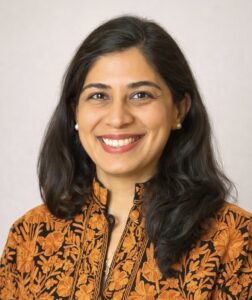
Professor Shenila Khoja-Moolji, MSI Faculty Director
We are excited to invite you to the Mountain Societies Initiative (Central Asia).
This project, led by Professor Khoja-Moolji , brings together scholars and practitioners to explore pressing questions in an under-studied context that offers broader lessons relevant to research, policy, and practice.
We ask: How do topography, location, and fragile terrains shape our approaches to development? What are the impacts of AI developments, climate change, and other technological innovations on mountain societies? How can mountain regions inform our work in public humanities, memory, and cultural heritage?
SPRING 2026 SPEAKERS
Memory and Social Life in Mountain Societies
March 10, 2026, 1:30pm EST
Dr. Fiona Naeem (Humboldt-Universität zu Berlin) will share findings from her new book, Pamiri Lifeworlds: Memory and Rupture in Gorno-Badakhshon Autonomous Oblast, Tajikistan. The book explores how Pamiri people use memory and material culture to navigate historical and contemporary disruptions. Zoom registration link.
Music and Cultural Heritage in Tajikistan
April 2, 2026, noon EST
April 2, 2026, noon EST
Dr. Chorshanbe Goibnazarov (University of Central Asia) will share findings from his new book, Music, Poetry and Identity in Badakhshan, Tajikistan: Singing and Sounding Community. The book brings scholarly attention to a little-known and fragile musical tradition as it responds to the evolving pressures of secularization, globalization, and the shifting cultural landscapes of mountainous societies. Zoom registration link.
Futures of the Humanities in Central Asia
April 28, 2026, 10:30am EST
Futures of the Humanities in Central Asia
April 28, 2026, 10:30am EST
Dr. Abdulmamad Iloliev (University of Central Asia) will deliver a talk on the future of the humanities in Central Asia, examining the enduring impact of Soviet legacies and the transformative possibilities of artificial intelligence. Zoom registration link.
FALL 2026 SPEAKERS
Migration Governance in Tajikistan and Russia
September 2026
Dr. Malika Bahovadinova (Leiden University) will deliver a talk on how migration policies and bureaucratic practices shape the lives and identities of migrants in Tajikistan and Russia. She will draw on ethnographic research to reveal the human impact of state governance and historical legacies.
Climate Change and Rural Livelihoods in Naryn, Kyrgyzstan
September 2026
September 2026
Dr. Azamat Azarov (University of Central Asia) explores how climate change is reshaping natural resources and agrarian life in Kyrgyzstan’s Naryn region, combining environmental analysis with gender-sensitive research. Highlighting differentiated impacts on women and men, the study reveals climate change as both an ecological and social process that reconfigures vulnerability and adaptation in rural communities.
Climate, Development, and Generational Change in Gilgit-Baltistan and Chitral, Pakistan
October 2026
Qudsia Naunehal Shah (The Institute of Ismaili Studies) explores how communities in Gilgit-Baltistan and Chitral understand nature through folklore and local narratives, tracing how these relationships have evolved alongside the region’s developmental transformations. It then turns to Gen Z voices, examining how young people navigate questions of climate change and migration, revealing development as an ongoing, contested process shaped by emerging challenges and aspirations.
Qudsia Naunehal Shah (The Institute of Ismaili Studies) explores how communities in Gilgit-Baltistan and Chitral understand nature through folklore and local narratives, tracing how these relationships have evolved alongside the region’s developmental transformations. It then turns to Gen Z voices, examining how young people navigate questions of climate change and migration, revealing development as an ongoing, contested process shaped by emerging challenges and aspirations.
From Afghanistan to Norway: Cultural Heritage on the Move
November 2026
Gulabuddin Sukhanwar (Norwegian University of Science and Technology) will reflect on displacement and the cultural practices that travel with people, with particular attention to literature, translation, and community memory. Drawing on experiences spanning Afghanistan and Norway, he will present his research on how cultural heritage is carried, reconstituted, and at times contested as it moves across borders, and how memory becomes a social resource for promoting inclusion and diversity.
November 2026
Gulabuddin Sukhanwar (Norwegian University of Science and Technology) will reflect on displacement and the cultural practices that travel with people, with particular attention to literature, translation, and community memory. Drawing on experiences spanning Afghanistan and Norway, he will present his research on how cultural heritage is carried, reconstituted, and at times contested as it moves across borders, and how memory becomes a social resource for promoting inclusion and diversity.